
Herniated Disc Treatment: Can a Chiropractor Help You Avoid Surgery?
A herniated disc diagnosis can feel like a sentence, but for most patients, surgery is not the only option. Learn how chiropractic care treats disc problems conservatively, and when surgery actually becomes the right call.
Few diagnoses are as anxiety-inducing as herniated disc. The phrase itself sounds catastrophic, and for many patients, the first specialist they see hints at surgery as the inevitable end point. The reality is far more reassuring: the great majority of herniated disc patients improve with conservative care, and never need an operation.
This guide explains what a herniated disc actually is, how chiropractic care treats it without surgery, what the evidence supports, and when surgical referral genuinely is the right next step.
What Is a Herniated Disc?
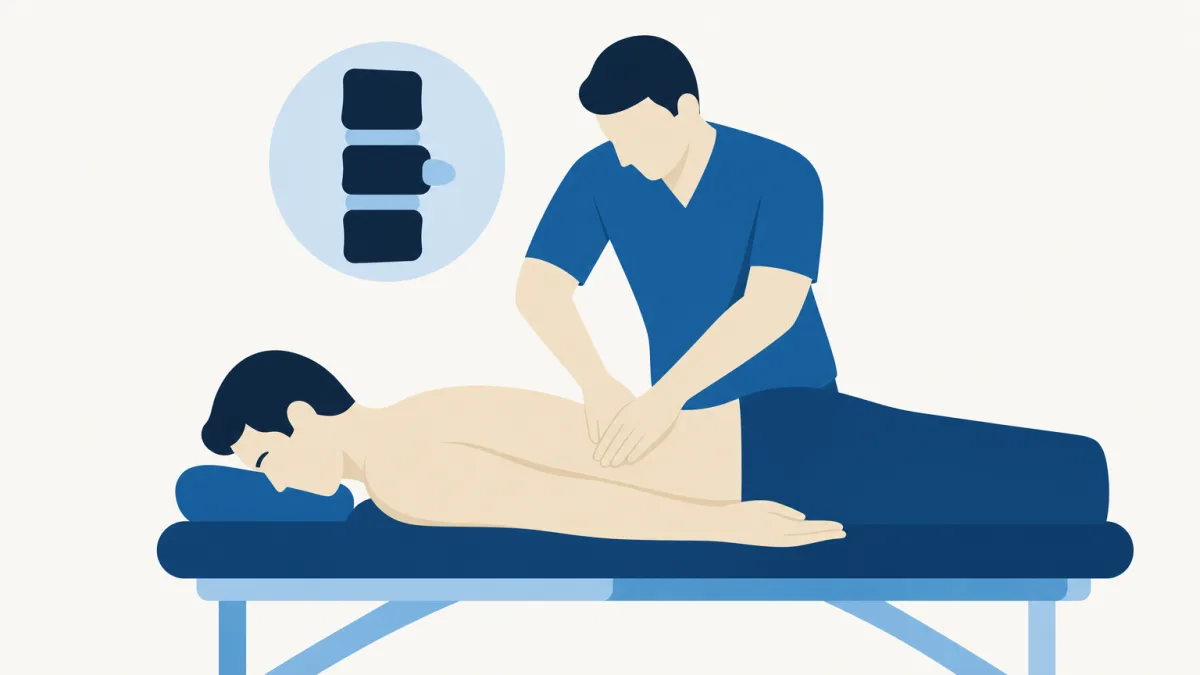
Between each pair of vertebrae in your spine sits a flexible, shock-absorbing structure called an intervertebral disc. Each disc has a tough outer ring called the annulus fibrosus and a soft, jelly-like inner core called the nucleus pulposus.
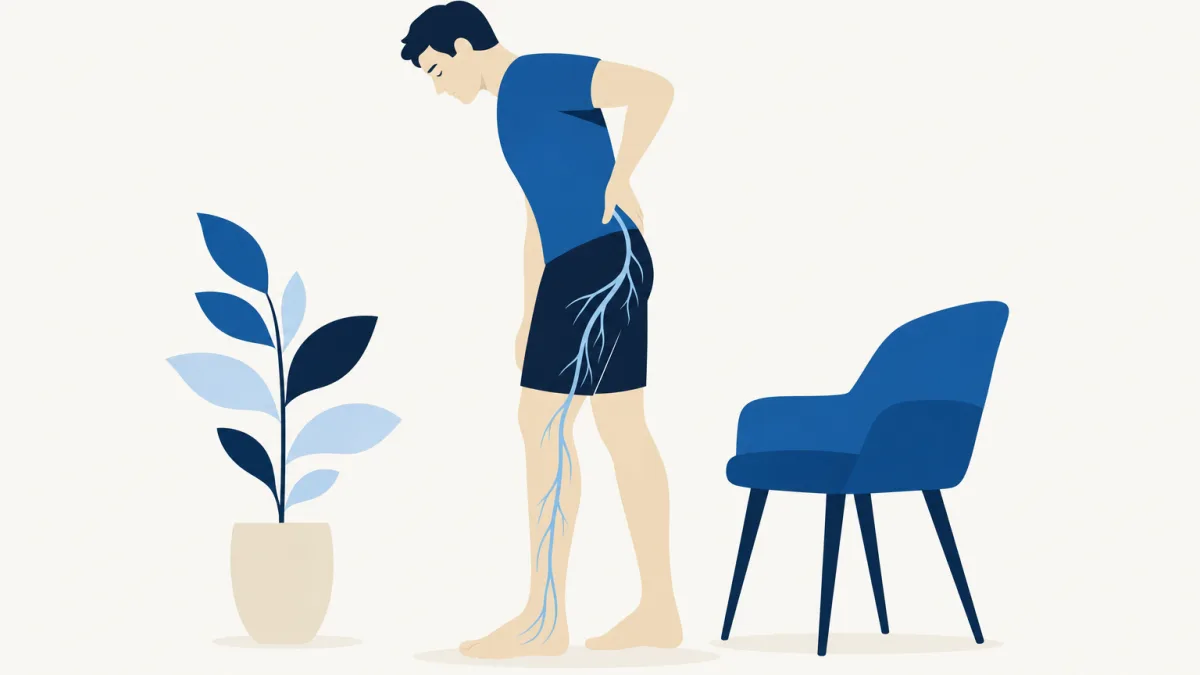
When the outer ring weakens or tears, the inner core can push outward. That is a disc bulge. When the inner material actually breaks through the outer ring, it is a herniated disc (sometimes called a "slipped disc", although nothing actually slips). The displaced disc material can press on the nerve roots that exit the spinal column, producing pain, numbness, tingling, or weakness in the area the nerve serves, most often the legs (in lumbar herniations) or the arms (in cervical herniations).
Common Symptoms of a Herniated Disc
- Sharp, radiating pain traveling down the leg (lumbar disc) or down the arm (cervical disc)
- Numbness or tingling along the path of the affected nerve
- Muscle weakness in the leg, foot, hand, or arm
- Back or neck pain that worsens with sitting, bending, coughing, or sneezing
- Difficulty sleeping or finding a comfortable position
Symptoms vary depending on which disc is involved and how compressed the nerve is. Two patients with identical MRI findings can experience dramatically different levels of pain.
What the Evidence Says About Conservative Care
A frequently misunderstood fact: many herniated discs resolve on their own over weeks to months. The body reabsorbs displaced disc material, inflammation subsides, and symptoms improve, even when imaging continues to show the herniation.
Major spine research and clinical guidelines now consistently recommend a course of conservative treatment first (including chiropractic care, physiotherapy, and targeted rehabilitation) before surgical evaluation, except in cases of progressive neurological deficit or red-flag symptoms.
How Chiropractic Treats Herniated Discs
A common misconception is that chiropractors will perform aggressive, high-velocity adjustments on disc patients. The opposite is true. Treatment for disc problems is gentler, slower, and more carefully directed than routine adjustments, and that is exactly why it works.
1. Diagnostic clarity first
Any responsible disc treatment plan begins with a precise diagnosis: what disc, which side, how compressed, and which nerve root. MRI imaging, if available, is reviewed in detail. The findings determine which techniques are appropriate.
2. Decompression and gentle mobilization
For most disc patients, the priority is reducing the pressure on the irritated nerve. Techniques include:
- Flexion-distraction: A specialized table-based technique that gently stretches and decompresses the lumbar spine without forceful manipulation
- Instrument-assisted adjustments: Tools that deliver precise, low-force impulses to specific spinal segments
- Mobilization rather than manipulation: Slow, rhythmic joint movement to restore function without high-velocity force
- Manual traction: Hands-on lengthening of the spine to reduce disc pressure
3. Soft tissue and inflammation management
Tense protective muscle spasm often amplifies the pain of a disc problem. Soft tissue work, dry needling, and targeted therapies reduce that secondary tension, which lets the nerve and disc settle.
4. Directional preference exercises
Many herniated disc patients have a "directional preference": a specific movement that consistently reduces pain or moves it closer to the spine (a process called centralization). Identifying this preference and prescribing the exercises that exploit it is one of the most effective tools in conservative disc care. McKenzie protocols are a common framework.
5. Core and postural rehabilitation
Once acute pain is reduced, the focus shifts to rebuilding the muscular environment that protects the spine. Deep core stabilizers, gluteal muscles, and proper movement patterns are trained progressively to prevent recurrence.
6. Activity and ergonomic adjustments
How you sit, sleep, lift, and move during the recovery period has an enormous impact on outcomes. Specific guidance (workstation setup, sleep position, when to walk, what to avoid) is part of the treatment, not an afterthought.
How Long Does Recovery Take?
Realistic timelines vary by severity, but most disc patients see meaningful improvement within 4–8 sessions of structured care, with continued progress over several months. Acute disc episodes that have been present for weeks tend to respond faster than chronic disc problems that have been ignored for years.
Recovery is rarely linear. A small flare-up after several good days does not mean the treatment is failing. It usually means a specific movement or position briefly irritated the nerve. A well-built treatment plan accounts for this and adjusts as you progress.
When Surgery Genuinely Is the Right Answer
Conservative care is the appropriate first step for the great majority of disc patients, but not all. Surgical referral is the right immediate next step when:
- Cauda equina syndrome: Loss of bladder or bowel control, saddle-area numbness. This is a medical emergency and requires immediate evaluation.
- Progressive neurological weakness: Worsening muscle weakness or foot drop that does not respond to conservative care
- Severe, unrelenting pain that is not improving with appropriate treatment over a reasonable timeframe
- Imaging showing a very large free disc fragment in a context where conservative care is unlikely to succeed
A responsible chiropractor recognizes these signs and refers without hesitation. The goal is the right treatment for the right patient, not loyalty to one approach.
About Dr. Victor Duani
Dr. Victor Duani is a rehabilitative chiropractor with over 20 years of clinical experience and a particular focus on conservative treatment of herniated and bulging disc problems. After graduating from the Durban University of Technology (DUT) School of Chiropractic in South Africa, he worked at Assaf Harofeh Medical Center and managed rehabilitative chiropractic at Sheba Medical Center, Tel Hashomer, environments where complex disc cases are common and the standards for diagnosis and treatment are exacting. His clinics in Tel Aviv and Tuval combine careful chiropractic care with structured rehabilitation specifically designed to help disc patients recover without surgery whenever possible.
Have a Herniated Disc? Get a Real Plan
If you have been told you have a herniated disc (or you suspect it based on your symptoms), the most useful next step is a careful diagnostic visit before any major decisions about treatment. Book a consultation with Dr. Duani at the Tel Aviv or Tuval clinic and bring your imaging. You will leave with a clear understanding of how severe the herniation actually is, what conservative care can realistically achieve, and a concrete plan to start. Surgery may be necessary in some cases, but it should be a considered decision, not the first option offered.