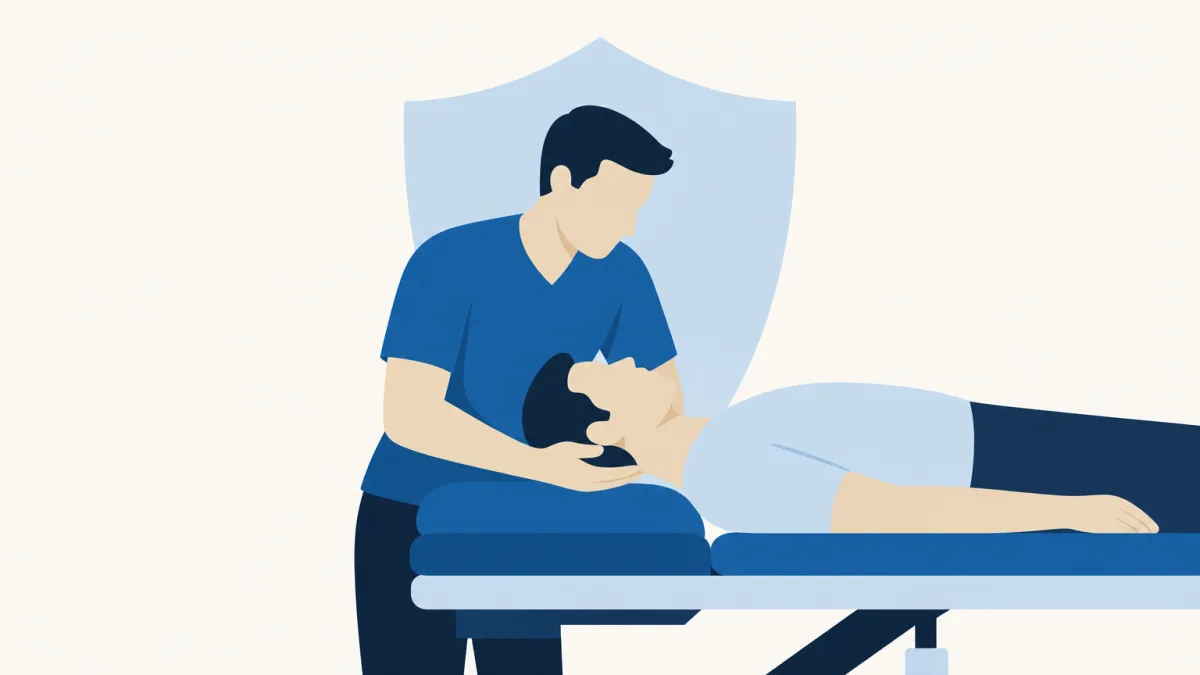

Chiropractor vs Osteopath vs Physiotherapist: Which One Should You See?
Confused about whether to see a chiropractor, osteopath, or physiotherapist? This honest guide explains the real differences, what each does best, and how to choose the right one for your problem.
When you are in pain and trying to figure out who to see, the options can be confusing. A friend recommends a chiropractor. Your doctor suggests physiotherapy. Someone at the gym swears by their osteopath. They all promise to fix your back, your neck, your sports injury, but they are not the same profession, and the differences matter.
This guide explains what each profession actually does, where they overlap, where they differ, and how to decide which one is right for your specific situation.
The Short Answer
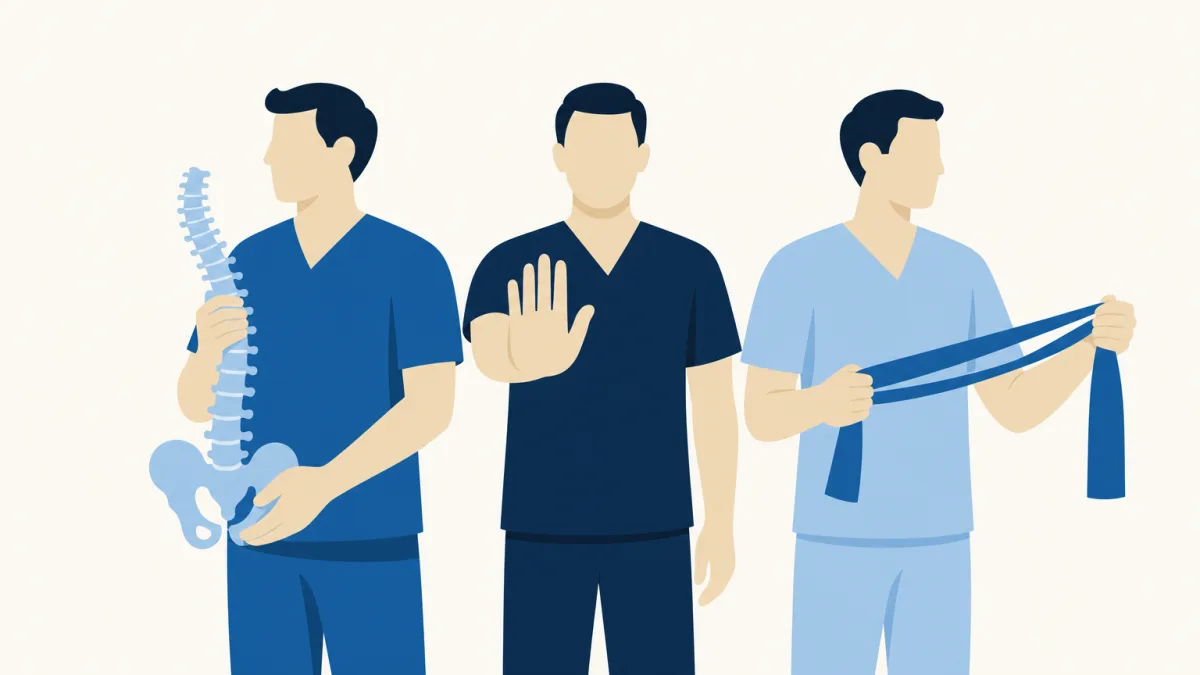
All three are evidence-based, regulated healthcare professions that treat musculoskeletal pain and movement problems. The fastest way to think about the differences:
- Chiropractors focus on the spine, the nervous system, and the function of joints, using precise, hands-on spinal adjustments alongside rehabilitation.
- Osteopaths take a whole-body, hands-on approach that treats joints, muscles, fascia, and circulation, often with gentle articulation rather than high-velocity adjustments.
- Physiotherapists emphasize exercise-based rehabilitation, movement retraining, and manual therapy, and are deeply integrated into the public healthcare system in Israel.
The right choice depends on what is wrong, what you have already tried, and what kind of treatment you are looking for. Let us break it down.
What Does a Chiropractor Do?
A chiropractor is a healthcare professional who specializes in disorders of the spine and musculoskeletal system, and the impact those disorders have on the nervous system. Chiropractors qualify as Doctors of Chiropractic (DC) after 4–5 years of post-graduate study covering anatomy, neurology, orthopedics, radiology, and biomechanics.
Their signature tool is the spinal adjustment: a fast, precise, low-force movement that restores motion and position to a restricted vertebral segment. Modern chiropractic care also includes soft tissue therapy, dry needling, rehabilitation exercises, postural retraining, and lifestyle guidance.
Chiropractors excel at:
- Acute and chronic back pain
- Neck pain and tension headaches
- Sciatica and other nerve-related pain
- Disc problems (bulging or herniated discs)
- Postural dysfunction from desk work
- Sports injuries where the spine or joint function is restricted
What Does an Osteopath Do?
Osteopaths use a whole-body, hands-on approach that emphasizes the interconnection between structure and function. Like chiropractors, they go through a multi-year doctoral or master's-level program. Their techniques include soft tissue work, joint mobilization, muscle energy techniques, and gentle articulation, generally with less of the high-velocity "click" associated with chiropractic adjustments.
Osteopaths tend to spend a longer time on broad, whole-body diagnosis and may treat areas seemingly far from the symptom: for example, working on the pelvis to address neck pain. Their toolkit overlaps significantly with chiropractic, but their philosophical emphasis is slightly different.
Osteopaths are often a strong choice for:
- Patients who prefer gentler, less forceful manipulation
- Whole-body tension and chronic stress patterns
- Digestive or visceral-linked musculoskeletal complaints
- Patients who want a longer, slower-paced manual session
What Does a Physiotherapist Do?
A physiotherapist is a movement and rehabilitation specialist who completes a bachelor's or master's degree in physical therapy. Physiotherapy is deeply integrated into hospitals, rehabilitation centers, and the public health system: most post-surgical and post-stroke rehabilitation in Israel is done by physiotherapists.
The core of physiotherapy is exercise-based rehabilitation: assessing movement deficits, designing progressive exercise programs, and coaching patients through the process of rebuilding strength, range of motion, and function. Many physiotherapists also use manual therapy techniques, but exercise is the foundation of the profession.
Physiotherapy is the standard of care for:
- Post-surgical recovery (knee replacement, ACL, shoulder surgery)
- Stroke and neurological rehabilitation
- Post-fracture and post-immobilization recovery
- Pediatric movement disorders
- Cardio-pulmonary rehabilitation
- Workplace and ergonomic injury programs
Where They Overlap
Here is the honest truth: there is significant overlap between all three professions when it comes to common complaints like back pain, neck pain, and sports injuries. A skilled chiropractor, osteopath, and physiotherapist can all help most patients with these conditions. The differences are less about the diagnosis and more about the toolkit each one uses and their philosophical emphasis.
In practice, the best clinicians of every profession increasingly borrow from each other. Modern chiropractic includes exercise rehabilitation. Modern physiotherapy includes manual therapy. Osteopaths often prescribe corrective movement. The boundaries are blurrier than the textbooks suggest.
How to Decide: A Practical Framework
Rather than asking "which profession is best?", ask yourself which scenario best matches your situation:
Go to a chiropractor first if...
- You have back or neck pain that comes and goes, sometimes severely
- You feel "stuck" or restricted in your spine, like a vertebra "needs to crack"
- You have sciatica, radiating pain, or numbness/tingling
- You suspect a disc problem (bulge or herniation)
- Posture or desk work is clearly part of the problem
- You want a clear diagnosis and a structured treatment plan that targets the root cause
Go to a physiotherapist first if...
- You are recovering from surgery or a fracture
- You have a neurological condition (post-stroke, Parkinson's, MS)
- You need supervised, progressive exercise rehabilitation
- You have been referred by a hospital or specialist physician
- You are managing a chronic condition that requires long-term movement programs
Go to an osteopath first if...
- You prefer gentler manipulation and longer sessions
- You have widespread, diffuse tension rather than one focal problem
- You have responded well to osteopathy in the past
- You want a hands-on, whole-body approach without spinal adjustments
What If You Have Already Tried One and It Did Not Work?
This is one of the most common reasons patients walk into a new clinic. Six months of physiotherapy with no real improvement. Years of painkillers that mask but never resolve. A treatment elsewhere that helped briefly, but the pain came right back.
If one profession has not produced lasting results, switching to another is reasonable, but with a clear question in mind: what specifically was missed? Often the gap is not the profession but the assessment. A chiropractor who skips imaging and rushes to adjust will miss a disc herniation. A physiotherapist who only prescribes generic exercises without examining joint restriction will miss a locked spinal segment. A good clinician of any profession starts with a thorough diagnosis, and refers out when the case is outside their scope.
Can They Work Together?
Yes, and increasingly, they do. Many of the most successful treatment programs combine approaches. A chiropractor may adjust a restricted spinal segment while a physiotherapist supervises the strengthening exercises that prevent the problem from returning. Rehabilitative chiropractic, in particular, is built on this combination: the structural correction comes first, then movement retraining locks in the result.
About Dr. Victor Duani
Dr. Victor Duani is a rehabilitative chiropractor with over 20 years of clinical experience. He graduated from the Durban University of Technology (DUT) in South Africa, and went on to work at Assaf Harofeh Medical Center and to manage rehabilitative chiropractic at Sheba Medical Center, Tel Hashomer, environments where chiropractors, physiotherapists, and physicians worked side by side. His practice in Tel Aviv and Tuval reflects that integrative experience: precise chiropractic adjustments combined with movement-based rehabilitation, designed to address the structural problem and lock in the result.
Still Not Sure? Just Ask
If you are unsure whether your problem is best handled by chiropractic, physiotherapy, or another specialty, the most useful next step is a brief assessment with a clinician who is honest enough to tell you when something is outside their scope. Book a consultation with Dr. Duani at the Tel Aviv or Tuval clinic, or call to describe your symptoms first, and get a clear answer about whether chiropractic is the right place to start.