
Sciatica: When Do You Actually Need Surgery?
Most sciatica improves without an operation, but not all of it. A balanced guide to the warning signs, when to see a spine surgeon, what the research says about surgery versus conservative care, and the questions worth asking.
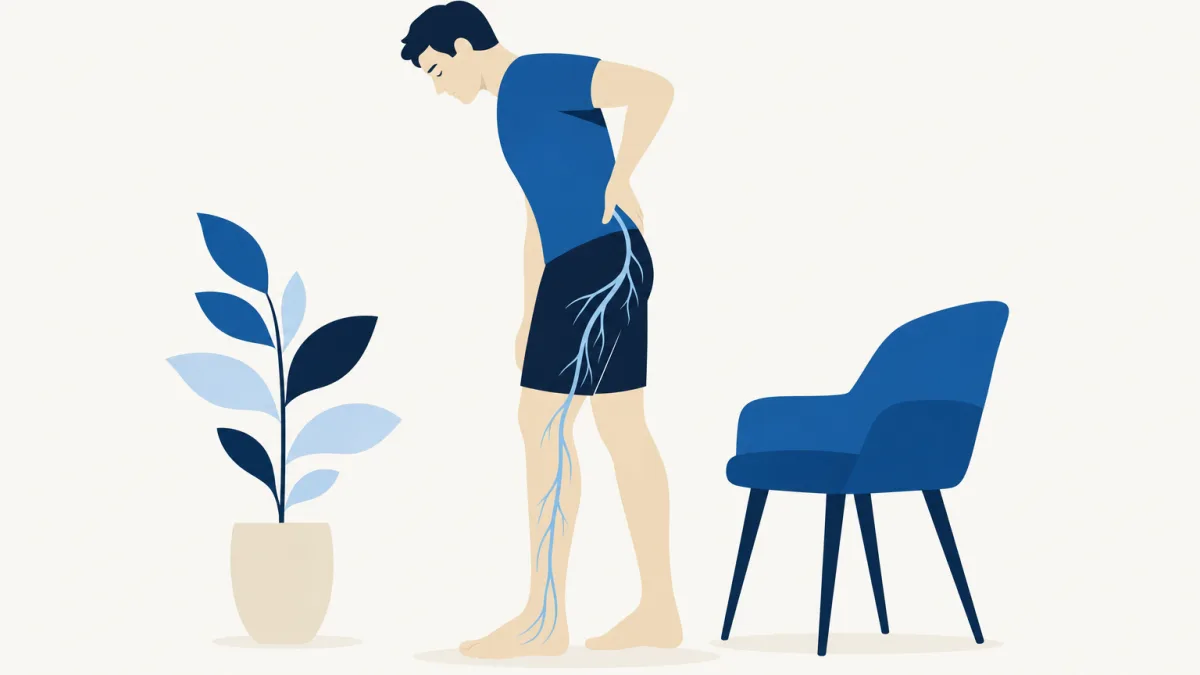
When sciatica keeps you up at night and sends pain down your leg for weeks, the word "surgery" tends to come up sooner or later, either as a fear or as a hope that it will all just stop. The honest answer sits between the two: most people with sciatica do not need an operation, but some people do, and for them waiting too long is a real cost.
This guide is meant to support a decision, not to push you toward or away from the operating room. It covers what the numbers suggest, the signs that should never be ignored, when a conversation with a spine surgeon makes sense, and what an organized non-surgical plan looks like in the meantime.
Most Sciatica Improves Without Surgery: What the Data Say
Sciatica is a symptom, pain that follows the path of the sciatic nerve, and it is most often caused by an irritated or compressed nerve root in the lower back, frequently because of a disc herniation. Health-fund guidance for patients, such as the Maccabi health guide on sciatica (in Hebrew), states that in most people the pain passes on its own within days to weeks, and that surgery is recommended only in a small minority of cases and only after weighing benefits against risks.
This matches what spine research has long described: the natural course of a disc-related nerve irritation is usually favorable, even when the MRI keeps showing the herniation. A scan does not tell the whole story. Some people with a large herniation have mild symptoms, and some with a modest one are in severe pain, which is why the decision is made by symptoms and examination together with imaging, never by the image alone.
It is also worth saying plainly that "most improve" is not "everyone improves". A minority of patients keep significant leg pain beyond the first couple of months, and those are the people for whom the rest of this article matters.
Warning Signs That Need Immediate Attention
A small number of presentations are not "wait and see" situations. If you notice any of the following, do not book a routine appointment and do not wait for the next treatment session. Go to an emergency department or contact a physician the same day:
- New bladder or bowel changes: difficulty starting or controlling urination, retention, leakage, or loss of control over the bowels
- Numbness in the "saddle" area: the groin, genitals, inner thighs or buttocks
- Progressive weakness in the leg or foot: a foot that drags or slaps, difficulty standing on your toes or heels, a leg that gives way, with weakness getting worse over days
- Severe, unrelenting pain that does not ease in any position and is not touched by usual pain relief
- Back or leg pain after significant trauma, such as a fall, a car accident or a hard impact
- Fever, unexplained weight loss, or a history of cancer together with new back and leg pain
The first three can point to cauda equina syndrome, a compression of the bundle of nerves at the base of the spine. It is uncommon, but it is a surgical emergency, and the outcome depends heavily on how quickly it is treated. The same sources that describe sciatica as usually self-limiting list these symptoms as reasons for urgent medical care.
When It Makes Sense to See a Spine Surgeon
Seeing a surgeon is a consultation, not a commitment. A consultation is reasonable, and often wise, in situations like these:
- The leg pain is still significant after roughly six to twelve weeks of a properly organized conservative program, with little or no trend of improvement
- The pain is so severe that you cannot sleep, work or function, even with appropriate treatment
- There is measurable neurological loss on examination (weakness, reduced reflex, spreading numbness) that is not recovering
- The imaging shows a nerve root compressed in a way that matches your symptoms and your examination, for example a large herniation on the same side and level as your pain
- You have had repeated, disabling episodes and want an informed view on your options
The key phrase is matches. Surgery for a disc herniation tends to work best when the symptoms, the examination and the scan all point to the same nerve root. When they do not match, the case for an operation is weaker, and further assessment is more useful than a procedure.
Surgery Versus Conservative Care: What the Studies Show
The most cited summary is the Cochrane review of surgical interventions for lumbar disc prolapse (Gibson and Waddell, updated Cochrane Review). In plain terms, it concluded that for carefully selected patients with sciatica caused by a disc herniation, surgery (discectomy) appears to give faster relief of the acute attack than non-surgical management. It also noted that the evidence has limits: only a few trials compared surgery directly with conservative care, many had design weaknesses, and the longer-term effects on the underlying disc condition were unclear.
That fits what many clinicians describe. For some patients with severe leg pain, an operation can shorten the painful stretch. As time passes, the gap between those who had surgery and those who were treated conservatively tends to narrow, and over a year or two the differences in many studies are smaller than people expect. These are group averages, however. They do not tell you which group you will fall into, and they do not make early surgery wrong for the person who cannot tolerate waiting.
So the choice is often not "who is right" but "what matters most to you": getting relief as fast as possible and accepting the risks of an operation, or taking a slower route that avoids them and keeps surgery available if things do not improve. Both are legitimate, as long as the decision is informed and the warning signs above are respected.
What an Organized Conservative Plan Looks Like
A conservative approach should not mean "wait and take painkillers". A well-run program is active and has checkpoints:
- Assessment first: history, a physical and neurological examination, and a review of imaging if you have it, so that the cause is understood and the red flags are screened for
- Clear activity advice: staying as active as symptoms allow, short walks, avoiding both prolonged bed rest and movements that clearly provoke leg pain, and practical guidance on sitting, sleeping and lifting
- Rehabilitation: exercises chosen for your presentation, for example a direction of movement that reduces leg symptoms, followed by gradual strengthening of the trunk and hips
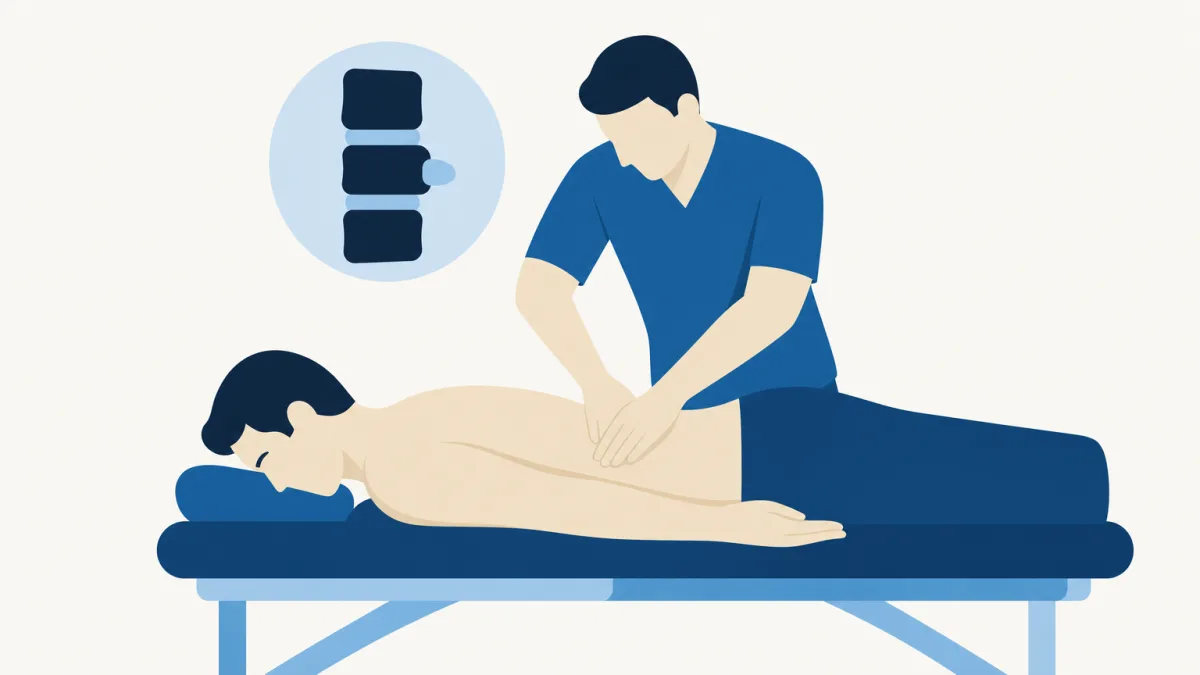
- Manual care: gentle mobilization, soft-tissue work or other hands-on techniques that may reduce pain and help you move, alongside the exercises rather than instead of them
- Realistic expectations: nerve-related pain often improves in steps and not in a straight line, and a flare-up does not by itself mean failure
- A review after a few weeks: if the trend is not clearly improving, or if neurological findings appear or worsen, the plan changes or you are referred on for a surgical opinion
At Dr. Victor Duani's clinics (Ramat Aviv in Tel Aviv, and Tuval near Karmiel) this is the framework used: an examination first, a plan with checkpoints, and referral when the picture calls for it. You can read more about the Ramat Aviv clinic, about sciatica treatment without surgery, and about herniated disc treatment. For planning, see how many chiropractic sessions are usually needed. Whatever the route, nobody can promise a particular result or timeline, and a good practitioner will tell you so.
Questions to Ask the Surgeon
If you do meet a spine surgeon, bring your imaging and a short written timeline of your symptoms. These questions help turn the visit into a real decision:
- Which finding on my scan and on examination makes you think this is the source of my leg pain?
- What exactly would the operation do, and what outcome is realistic for leg pain versus back pain?
- What are the risks in my case, including recurrence of the herniation and the chance of needing another procedure?
- What happens if I wait a few more weeks? Is there any harm in continuing a structured conservative program first?
- What is the typical recovery: time off work, driving, lifting, and returning to exercise?
- Is there a less invasive option, such as an injection or a smaller procedure, and how does it compare?
- How many of these operations do you perform, and would you want a second opinion in my situation?
A second opinion is a normal part of this process. A confident surgeon will not mind it, and neither will a good conservative practitioner.
Rehabilitation After Surgery
If you do have surgery, the operation is the start of recovery, not the end. Surgery relieves pressure on the nerve, but it does not retrain the muscles around the spine, and it does not change the habits that loaded your back in the first place. Follow your surgeon's instructions about wound care, activity limits and timing, and ask when rehabilitation can begin.
Typically, early rehabilitation focuses on walking, gentle movement and avoiding positions the surgeon has restricted. Later it moves to strengthening the trunk and hips, improving movement patterns for lifting and sitting, and a gradual return to work and sport. Each step should be agreed with your surgical team. Manual or hands-on care, if used, belongs later and only with the surgeon's clearance. Recovery varies a lot between people, so a plan built around your own progress is more useful than a generic calendar.
A Practical Way to Think About It
Putting it together: if you have red-flag symptoms, seek urgent care. If you have sciatica without them, there is usually time to try an active, structured program and to see whether it is working. Check progress at a few weeks. If you are not improving, or the pain is more than you can reasonably tolerate, a surgical consultation is a sensible next step and not a failure. And if surgery is recommended, ask your questions, consider a second opinion, and plan your rehabilitation in advance.
This article is general information and not a diagnosis or a substitute for medical advice. If you are unsure where you stand, an examination is the best first step. You are welcome to book a consultation at the Ramat Aviv clinic or at Tuval, and bring any imaging you have. If chronic or recurring pain is part of the picture, our overview of chronic back pain may also help.