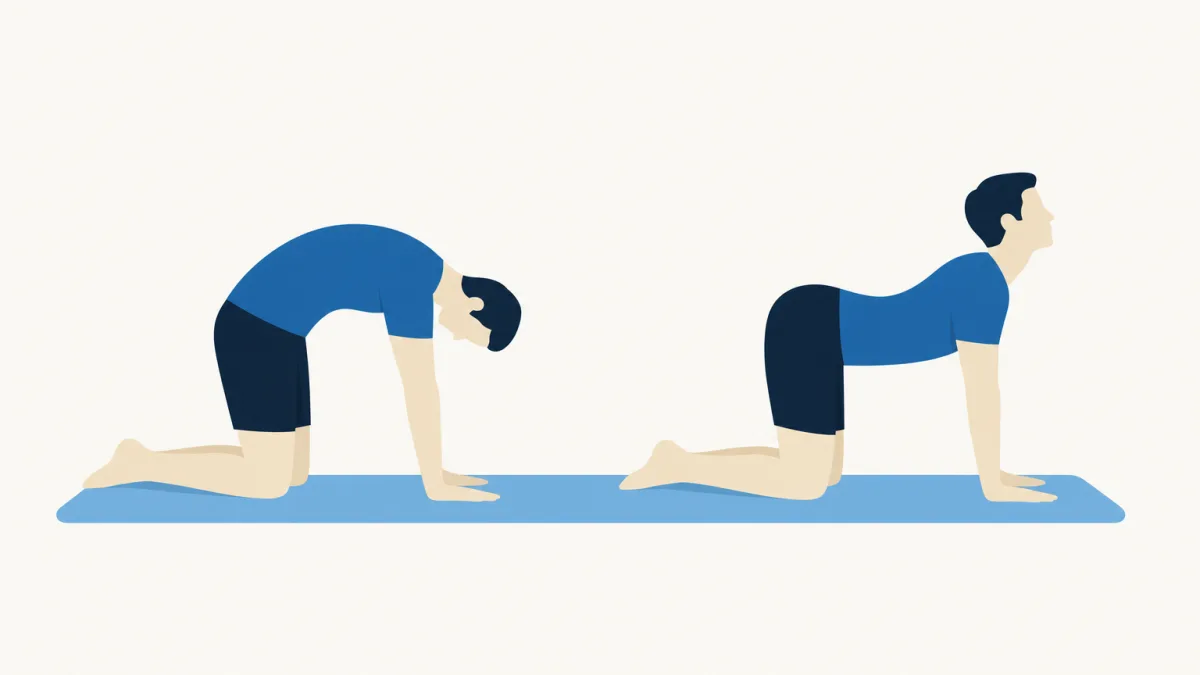

A Bedtime Routine for Chronic Back Pain
Pain disrupts sleep, and poor sleep can make pain feel worse. A calm, repeatable evening routine, with three gentle stretches, may help you wind down and sleep more comfortably.
If you live with chronic back pain, evenings can feel like a negotiation. You are tired, but your back is stiff. You lie down, but you cannot get comfortable. You finally drift off, and a few hours later you are awake again. Many people ask the same question: how do you sleep with chronic back pain when the body will not cooperate?
This article is not about finding one perfect position. It is about the hour before sleep: a short, repeatable routine that aims to lower tension, calm the nervous system, and give your back the best chance of a more restful night. It does not promise a cure, and results differ from person to person, but small consistent habits often add up.
Pain and Sleep: A Cycle That Feeds Itself
Pain makes it harder to fall asleep and to stay asleep. A night of broken sleep, in turn, tends to leave you more tired, more tense, and more sensitive to discomfort the next day. Stress and worry about the night ahead can add another layer: lying in bed bracing for pain keeps the muscles around the spine tight, which is the opposite of what you want.
The goal of an evening routine is to interrupt that loop at the point where you have the most control: the transition from the day into bed. You cannot switch pain off, but you can lower the volume of the body and mind before you lie down. For background on why back pain becomes persistent in the first place, see our guide to understanding chronic back pain.
The Hour Before Bed: 5 Steps
You do not need to do all five every night. Start with the ones that feel realistic and build from there. Doing a simple version consistently is better than an ambitious one you drop after three days.
- Step 1: Set a gentle end to the day. Choose a fixed time to start winding down, about 45 to 60 minutes before bed. A regular schedule helps the body learn when it is time to rest.
- Step 2: Move out of the chair. If you have been sitting for hours, take a slow five-minute walk around the home. Light movement is usually kinder to a stiff back than staying still. If sitting is a big part of your day, our article on posture in the digital age offers ideas for easing the load.
- Step 3: Add warmth. A warm shower or a warm (not hot) heat pack on the lower back for 10 to 15 minutes may help tight muscles relax. Place a cloth between the pack and your skin and never fall asleep on a heating pad.
- Step 4: Do three gentle stretches. Slow, easy movements, described in the next section, may help release the tension that builds up through the day.
- Step 5: Quiet the mind and the screen. Dim the lights, put the phone away, and try slow breathing: in through the nose for about four seconds, out for about six. Longer exhales tend to signal the body that it is safe to slow down.
3 Gentle Stretches Before Bed
These are stretches before bed for the back that aim to be easy and low-effort. Move slowly, breathe normally, and stay well within a comfortable range. This is not a workout, and you should never push into pain.
1. Knee-to-chest, one leg at a time
Lie on your back with your knees bent. Bring one knee gently toward your chest, hold it with both hands, and breathe slowly for 20 to 30 seconds. Lower it and switch sides. Repeat two or three times per side.
2. Supported spinal twist
Still on your back, with knees bent and feet flat, let both knees fall slowly to one side while your shoulders stay relaxed on the bed. You can place a pillow under the knees if the stretch feels too strong. Stay for 20 to 30 seconds, return to the middle, and repeat on the other side.
3. Child pose, or a hip-flexor release
On hands and knees, sit your hips back toward your heels and rest your forehead on a pillow or folded arms. Breathe slowly into your lower back for 30 to 60 seconds. If kneeling is uncomfortable, lie on your back with your calves resting on a chair or the bed so that hips and knees are bent at about ninety degrees.
Important safety rule: stop immediately if the pain increases, or if you feel tingling, numbness, or pain spreading down a leg. Do not try to stretch through it. If it keeps happening, speak with a professional before repeating the movement. These suggestions are general and are not a substitute for an assessment of your individual condition.
If you enjoy slow, controlled movement and breathing, a guided approach may suit you well. Our yoga-based rehabilitation is built around gentle, progressive work tailored to the person, and you can read more about how it fits with spinal care in yoga and chiropractic.
Mattress, Pillow, and Sleeping Environment
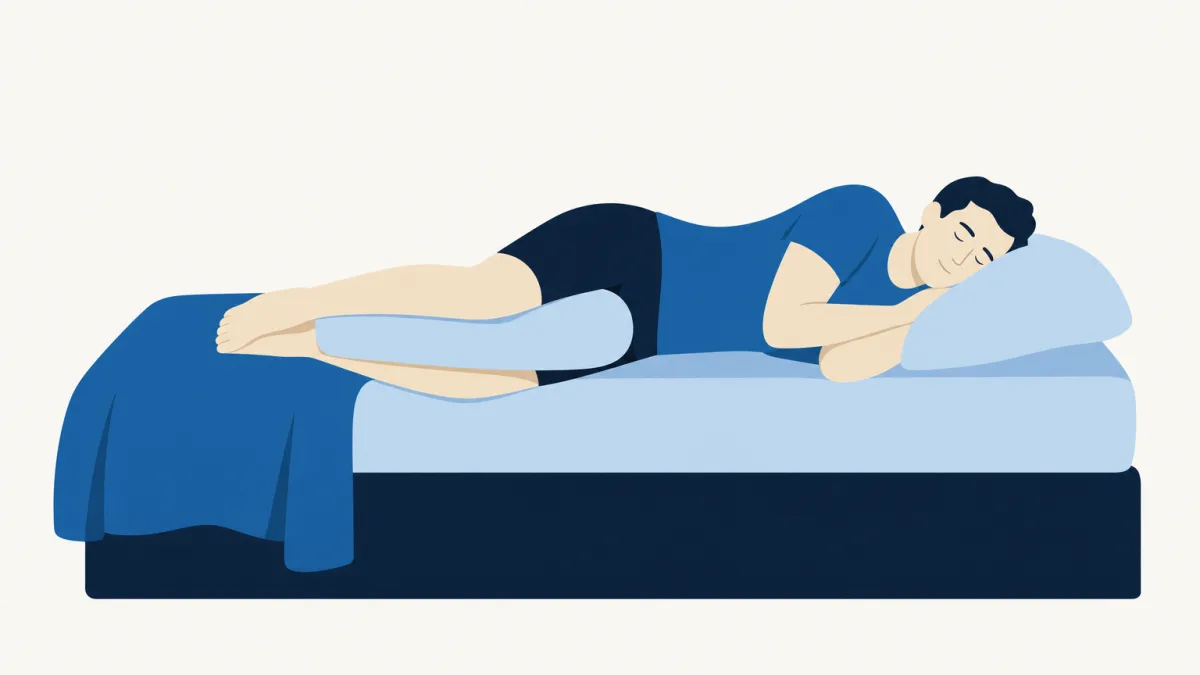
Your surroundings can quietly work for you or against you. A cool, dark, quiet room supports sleep in general. A mattress that is neither sagging nor painfully hard, and a pillow that keeps your neck roughly in line with your spine, make it easier to stay comfortable. A pillow between the knees (side sleeping) or under the knees (back sleeping) is a simple, low-cost adjustment.
We do not go into the details of each position here. If you want to compare back, side, and stomach sleeping and learn how to set up your pillows, read our full guide to sleeping positions for back pain. Treat it as the companion to this routine: the routine prepares you for bed, and that article helps you settle in once you are there.
Waking Up in Pain in the Middle of the Night
Waking at 2 or 3 a.m. with a stiff, sore back is common, and the first rule is to avoid panic. Frustration and clock-watching tend to raise tension and make it harder to fall back asleep. A few steps that may help:
- Change position slowly. Roll to your side with a pillow between your knees, or lie on your back with a pillow under your knees.
- Try the slow breathing from Step 5 for a few minutes, with a hand on your belly.
- Do one or two of the gentle stretches above if they feel comfortable. Keep the lights low.
- If you are still awake after about 20 minutes, get up, sit somewhere comfortable in dim light, and do something quiet until you feel sleepy. Avoid bright screens.
- Keep a small notepad by the bed. Writing down what woke you (a position, a time, a movement) can reveal patterns worth discussing with your practitioner.
When to Talk to a Doctor
A bedtime routine is a supportive habit, not a way to manage every kind of back pain. Seek medical advice promptly if you notice any of the following:
- Night pain that does not change with any position and keeps waking you or gets steadily worse.
- Unexplained weight loss.
- Fever together with back pain.
- New numbness, tingling, or weakness in the legs.
- Changes in bladder or bowel control. This needs urgent medical attention.
If your pain is persistent but none of these apply, a professional assessment can help clarify what is contributing to it and what to do next. At our clinics in Ramat Aviv, Tel Aviv, and in Tuval, near Karmiel, Dr. Victor Duani and the team evaluate the whole picture, including posture, movement patterns, and daily habits, and build a plan around you. Book an assessment, and bring your bedtime notes with you.