
Pelvic Pain in Pregnancy: Causes and What Helps
Pelvic girdle pain, groin pain and SI joint pain are common in pregnancy. Learn what may be behind them, when to call your doctor or midwife, and what you can do at home.
Many women expect a sore back in pregnancy. Fewer expect a sharp pain at the front of the pelvis when turning over in bed, a deep ache on one side of the buttock, or a pulling feeling in the groin when climbing stairs. If that sounds familiar, you are not imagining it, and you are not alone. Pelvic pain in pregnancy is common, and it is often more about how the pelvis handles load than about anything being "wrong" with the baby.
This article explains what usually lies behind pelvic pain, how to tell the main patterns apart, which signs mean you should contact your doctor or midwife right away, and what may help at home and in the clinic. It is general information and does not replace an examination by your own medical team. If you are looking for the broader picture of lower back pain in pregnancy, see our article on chiropractic care during pregnancy.
Why the Pelvis Hurts During Pregnancy
The pelvis is a ring made of three bones: the sacrum at the back and the two hip bones, which meet at the front at the pubic joint (the symphysis pubis). The ring is held together by strong ligaments and a small amount of cartilage, and it normally moves very little. During pregnancy several things change at the same time:
- Hormones. The body produces relaxin and other hormones that soften ligaments and cartilage to prepare the pelvis for birth. The joints become a little more mobile, and in some women they become less stable than the muscles can comfortably manage.
- Weight and posture. A growing belly shifts the center of gravity forward. The pelvis tilts, the lower back deepens its curve, and the load on the pelvic joints changes with every step.
- Uneven loading. Walking, climbing stairs, standing on one leg to put on trousers, or turning in bed all load one side of the pelvis more than the other. A joint that is slightly less stable tends to complain exactly in these moments.
- Muscle fatigue. The deep abdominal, hip and pelvic floor muscles work harder to stabilize the pelvis, and when they tire, pain often builds up toward the end of the day.
Symphysis Pubis, SI Joint or Something Else: How to Tell
Only a clinician who examines you can say what the source is, and pain from different structures often overlaps. Still, a few typical patterns can help you describe your symptoms accurately:
Symphysis pubis dysfunction (symphysiolysis)
Pain, burning or a stabbing feeling over the pubic bone at the front, sometimes spreading to the groin, inner thighs or perineum. It is often worse when parting the legs, getting in and out of a car, climbing stairs, or turning over in bed, and some women notice a clicking sensation or a waddling walk. The Maccabi Healthcare Services information page on the topic describes it as pain in the pelvis and groin that can also reach the back and lower abdomen, linked to the softening of the cartilage between the pelvic bones under the influence of the hormone relaxin (Maccabi, in Hebrew).
Sacroiliac (SI) joint pain
A deep, dull or sharp pain on one side of the lower back, just beside the dimples above the buttocks, sometimes spreading into the buttock or the back of the thigh. It is often worse with standing on one leg, climbing stairs, getting up from a chair, or lying on the painful side.
Other possible sources
Pain in the groin or front of the pelvis can also come from the round ligaments stretching as the uterus grows (usually a brief, sharp pull on sudden movement), from tight hip muscles, from a urinary tract infection, or from Braxton Hicks contractions. This is exactly why a new pain that is persistent, one-sided or accompanied by other symptoms deserves a proper assessment rather than guessing.
When to Contact Your Doctor or Midwife Right Away
Most pelvic pain in pregnancy is mechanical and, although unpleasant, is not dangerous. But some symptoms should never be put down to "just the pelvis". Contact your obstetrician or midwife, or go to the emergency room, without waiting for a manual therapy appointment, if you have:
- Vaginal bleeding or a sudden leak of fluid.
- Regular contractions, or tightening of the abdomen that comes in a rhythm, particularly before week 37.
- Fever or chills, or burning when urinating, which may point to an infection.
- Sudden, severe pain in the abdomen or pelvis, or pain that is getting steadily worse.
- Reduced fetal movement compared with what is usual for you.
- Pain in one calf with swelling or redness, shortness of breath or chest pain, severe headache or visual changes.
What You Can Do at Home
Once serious causes have been ruled out, a few everyday changes may reduce the strain on the pelvis. They will not suit everyone equally, so treat them as things to try and keep what works for you:
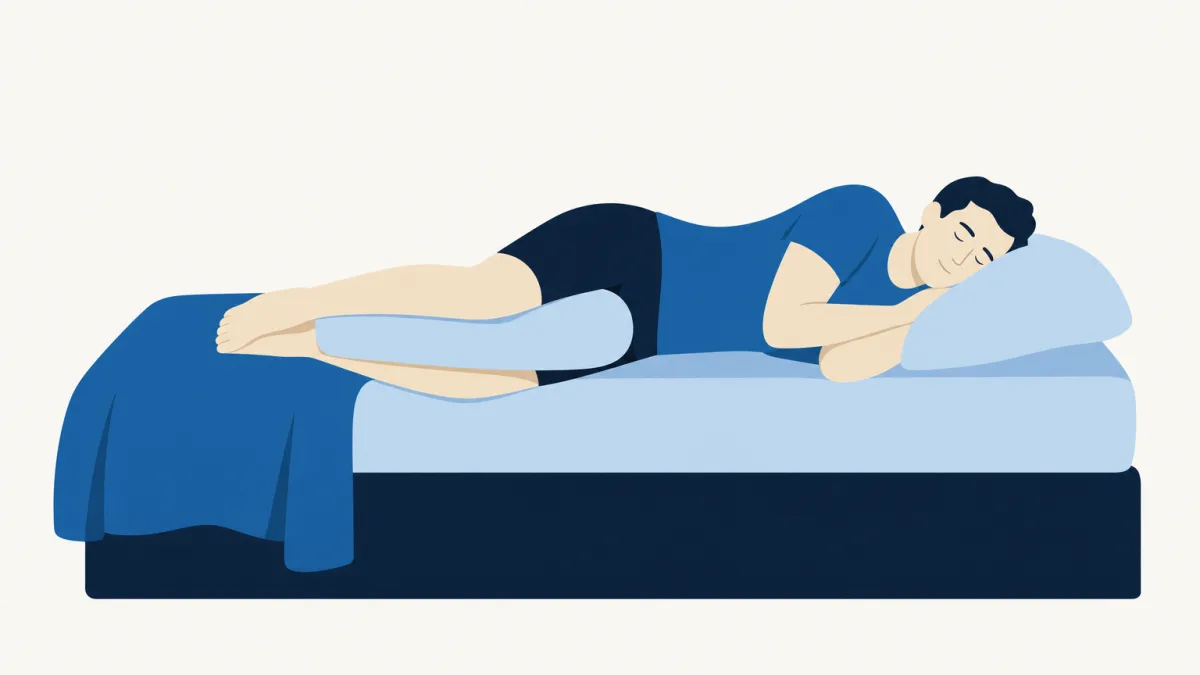
- Pillow between the knees. Lie on your side with a firm pillow between the knees and ankles to keep the pelvis level. A second pillow under the belly may help too. For more ideas, see our guide to sleeping positions for back pain.
- Smaller steps. Shorter strides tend to load the pubic joint less. Avoid wide steps, long lunges and deep squats if they provoke pain.
- Avoid asymmetric movements. Sit down to dress rather than standing on one leg, keep your knees together when getting out of the car or bed (rotate as one unit, like a log), avoid crossing your legs and avoid carrying a heavy bag or child on one hip.
- Support belt. Some women find that a maternity pelvic support belt worn low across the hips gives welcome relief. Ask your physiotherapist or midwife which type and how long to wear it, since it is not meant for all-day use.
- Gentle movement. Walking within your comfort zone, swimming, or water exercise may help many women. Stop anything that sharpens the pain and ask for adapted exercises.
Gentle, supervised movement can also help. Our yoga-based rehabilitation approach uses slow, controlled exercises that aim to build pelvic and core stability, and it is adapted to each person and stage of pregnancy.
Gentle Manual Therapy in Pregnancy: What It Involves and What Is Known
Many women ask whether a chiropractor can help with pelvic pain during pregnancy. The honest answer is that it may help some women, and that the research is limited. Studies of manual therapy, exercise and support belts for pregnancy-related pelvic and back pain are generally small and vary in quality, so no one can promise a particular result. What can be said is that gentle, adapted care is commonly used alongside other approaches, and that many women report feeling better after it.
At Dr. Victor Duani's clinics in Ramat Aviv, Tel Aviv, and in Tuval, near Karmiel, treatment during pregnancy begins with a conversation and an examination: when the pain started, what provokes it, how the pelvis and lower back move, and whether anything in the story suggests that you should be seen by your obstetrician first. If so, we will say so.
When treatment is appropriate, it is adapted to the stage of pregnancy and to your comfort. It may include gentle, low-force mobilization of the lower back, hip and SI joint, soft tissue work for tight muscles around the pelvis, positioning with pillows or an adapted table, and simple exercises to do at home. Techniques involving strong twisting or pressure on the abdomen are avoided. For some patients, kinesio taping is used as an additional support for the lower back and pelvic area, aiming to ease strain during daily activity.
We encourage coordination with your obstetrician or midwife, particularly if you have a high-risk pregnancy, a low-lying placenta, bleeding history, or any complication. A treatment plan works best when everyone involved in your care knows about it.
After the Birth: When the Pain Persists
For many women, pelvic pain eases within days to weeks after delivery as hormone levels settle and the load on the pelvis falls. For others it lingers, and the demands of the new baby (lifting, feeding positions, carrying, sleeping badly) can keep the joints irritated. If pain is still limiting you several weeks after birth, it is reasonable to ask for an assessment; you do not have to wait it out.
Postpartum care often focuses on restoring pelvic stability gradually, correcting feeding and carrying positions, and rebuilding core and pelvic floor strength at a pace your body can handle. If you are also thinking about your baby's comfort and development, you can read about our gentle approach for babies and infants.
Frequently Asked Questions
Is pelvic pain in pregnancy normal?
It is common, but "common" does not mean you must simply endure it. Mild discomfort is frequent; pain that stops you walking, sleeping or working is a reason to seek help. The Maccabi page mentioned above notes that symphysis pubis dysfunction is not considered a risk for pregnancy complications and does not in itself prevent a vaginal delivery, but your own doctor is the right person to confirm this for you.
How do I know if I should see a doctor rather than book a treatment?
If you have bleeding, contractions, fever, sudden severe pain or reduced fetal movement, contact your doctor or midwife first. For pain that is mechanical, changes with movement and eases with rest, a consultation about manual and exercise-based care may be a reasonable option, ideally in coordination with your medical team.
If pelvic pain is affecting your pregnancy, you are welcome to get in touch with Dr. Victor Duani's clinic to talk through your symptoms and decide on the right next step together.